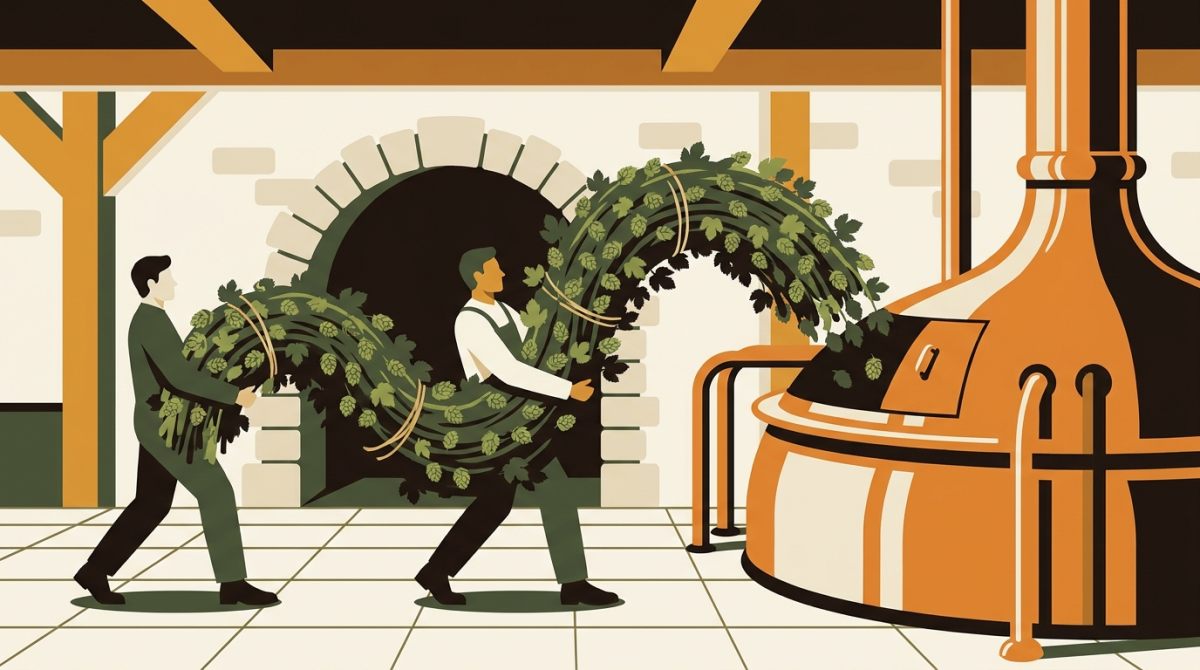
Every September, for a few short weeks, British brewers make a style of beer that cannot exist at any other time of year. Green hop beer — sometimes called fresh hop or wet hop beer — is brewed with hops rushed straight from the bine to the brew kettle, undried, still sticky with resin and smelling of the field they grew in. Miss the window and you wait a whole year for another taste. It is the closest brewing gets to a harvest festival, and if you want to see where it all begins, our Kent hop farm tour at Hukins Hops takes you into the middle of a working harvest.
What is green hop beer?
To understand what makes green hop beer special, it helps to know what normally happens to a hop. Hops are harvested over a few frantic weeks from late August into September, and because the fresh cones are full of moisture, they begin to deteriorate almost immediately. So virtually the entire crop is dried within hours of picking — historically in Kent's iconic oast houses, today in modern kilns — then pressed and processed so brewers can use it all year round.
Green hop beer skips the drying altogether. The brewer arranges for freshly picked hops to arrive at the brewery within hours of leaving the bine — many insist on brewing the same day — and throws them into the copper while they are still green and wet. It is logistically awkward, slightly chaotic and completely worth it.
It also demands generosity. Fresh hops are mostly water, so brewers need several times the weight of green hops to achieve the impact a modest charge of dried hops would give — which means bin bags and buckets of fresh cones being hauled into breweries across the hop counties every September, usually with the whole team roped in.
Why it only exists for a few weeks a year
The style is inseparable from the harvest itself. Fresh hops cannot be stored or shipped at leisure; they need to go from field to kettle almost immediately, which means green hop beers can only be brewed during the picking season — and only realistically by brewers within easy reach of a hop farm. The beers then appear on bars from late September into the autumn, and when they are gone, they are gone. Part of the pleasure is exactly that scarcity: like sloe gin or the first asparagus, green hop beer is a genuine seasonal product in an industry that mostly runs all year round.
There is also a vintage quality to it. Because the hops are unprocessed, each year's growing conditions — sun, rain, when the pick happened — come through in the glass. The same beer brewed from the same hop variety can taste noticeably different from one September to the next, which gives beer lovers a very good excuse to try it every single year.
What does it taste like?
Softer and greener than you might expect. Dried hops concentrate their character; fresh ones deliver something more delicate — grassy, sappy, freshly cut hedgerow notes, sometimes a gentle chlorophyll edge, over a softer bitterness. A good green hop pale ale tastes vividly alive in a way that is hard to describe and easy to recognise. Many are brewed as easy-drinking pales and best bitters, and plenty appear on cask, where the gentle carbonation suits the style beautifully — one more reason cask ale's comeback is worth celebrating.
Kent: the home of the harvest
Hops grow in several corners of Britain — Herefordshire and Worcestershire have a proud tradition of their own — but Kent is the spiritual home. The Garden of England has grown hops for centuries, gave the world heritage varieties like Fuggle and East Kent Goldings, and its oast houses remain the county's most recognisable buildings. Every autumn, Kent's brewers celebrate the picking season with a wave of green hop beers, and the county hosts green hop festivals and events around late September and early October — line-ups and dates change each year, so check the official sites before planning a trip. For the bigger picture on the county's beer, see our Kent brewery tour guide.
See the harvest up close
Reading about the harvest is one thing; standing underneath it is another. At Hukins Hops, a working farm near Tenterden, our two-hour guided tour walks you through hop gardens where the bines are trained up to eighteen feet overhead — in season, a genuinely startling sight — before heading into the picking and processing facility to watch the machinery strip, sort and dry the crop at full tilt. Your guide explains how different varieties are grown for today's craft brewers and how the cones in your hand end up shaping the aroma of your pint. Afterwards there is time in the farm taproom to put the theory into practice. Tours run on selected Saturdays during the season, children are welcome free with a paying adult, and harvest-time dates are the ones to aim for.
How to find green hop beers near you
From late September, watch the taps. Breweries and taprooms in hop-growing counties are the surest bet, but green hop beers travel further than they used to, and good bottle shops and beer-focused pubs across the country often get a small allocation. Ask what is fresh, look for "green hop", "fresh hop" or "wet hop" on the pump clip, and do not put off trying one — most are brewed once, in small batches, and drunk within weeks.
Green hop beer is British brewing at its most seasonal and most local: one harvest, one chance, once a year. Catch it while you can.