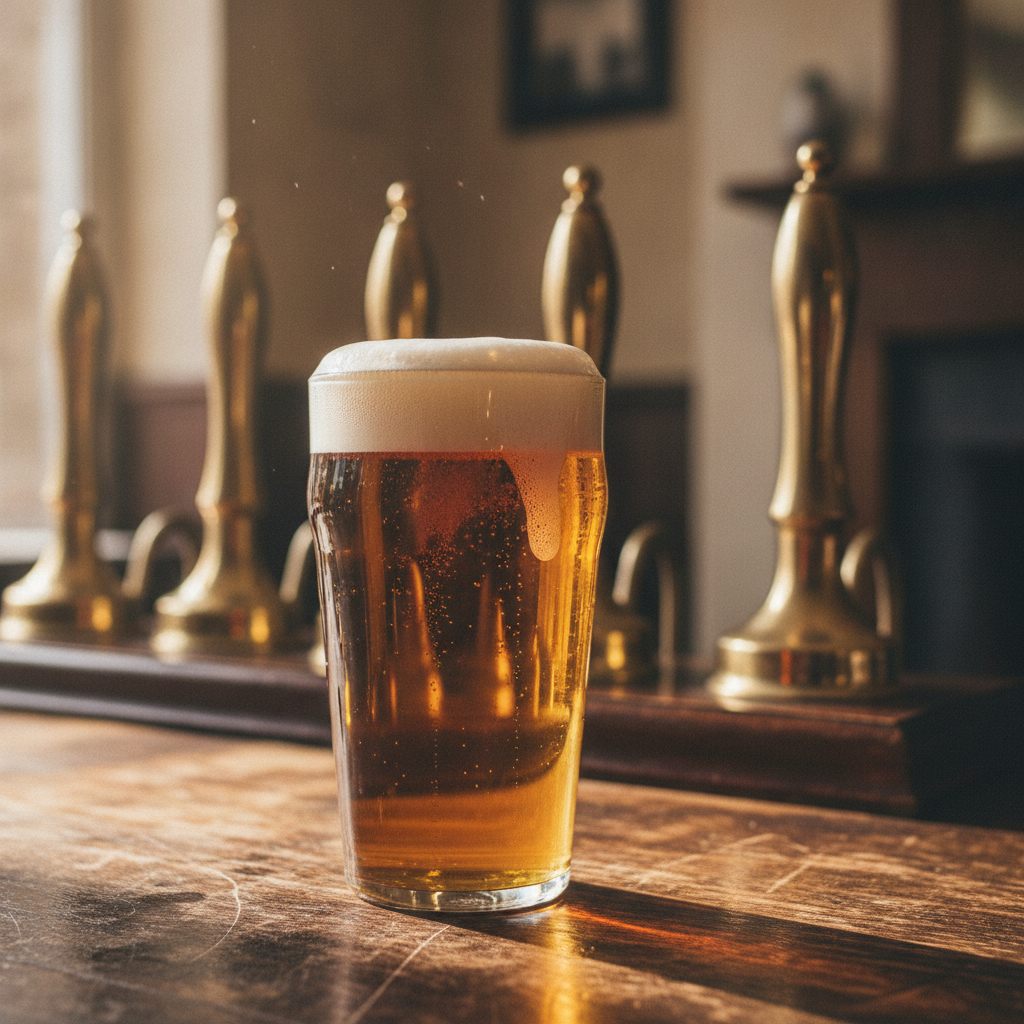
There is a particular sound that says you are in a good British pub: the soft, unhurried pull of a handpump as a server draws a pint of cask ale up from the cellar. No hiss of gas, no roar of a chiller, just beer coming to the glass much as it has for generations. For a while it looked as though that sound might fade. Instead, cask ale is enjoying a genuine comeback, and the great British pint is booming again in a way few would have predicted a decade ago.
The revival is not merely nostalgia talking. Independently brewed cask beer is now posting double-digit growth, according to the Society of Independent Brewers and Associates (SIBA) and its Independent Beer Report. A new generation is discovering what their grandparents already knew, and the traditional pint is being reappraised as something modern, characterful and worth ordering on purpose. Here is why cask ale is back, what makes it so special, and how to get the most out of it.
What exactly is cask ale?
Cask ale, often called real ale, is living beer. Unlike keg beer, which is filtered, pasteurised and pushed to the glass with added carbon dioxide, cask beer finishes its conditioning in the very container it is served from. Live yeast remains in the cask, quietly working away in the pub cellar and producing a gentle, natural carbonation. When you order a pint, it is drawn up through a handpump, or occasionally poured straight from a tap on the cask itself.
That living quality is the whole point. It also makes cask ale genuinely uniquely British. While brewers around the world make superb beer, this particular tradition of unfiltered, unpasteurised, cellar-conditioned ale served fresh is something Britain does like nowhere else. It is part of our pub culture in the deepest sense.
Two things define the cask experience:
- Temperature: Cask ale is served cool, at roughly 11 to 13 degrees Celsius, never ice cold. That is warmer than a lager but a long way from the "warm beer" myth. At this temperature the flavours actually open up, which a near-frozen pint simply cannot do.
- Carbonation: The soft, gentle fizz comes from the beer's own secondary fermentation, not from a gas cylinder. That is why a good pint of cask feels rounder and smoother in the mouth than its keg cousin.
Because it is alive, cask ale is also perishable. A tapped cask has only a few days at its best, which is why a well-kept pint is a small act of craft on the part of the landlord, and why finding one in perfect condition is such a pleasure.
The numbers behind cask ale's comeback
For years the story around cask was one of slow decline, and it would be dishonest to pretend the wider picture is uniformly rosy. British brewing is under real pressure, with rising costs and pub closures making life hard for producers of every kind. Yet within that challenging market, one figure stands out: independently brewed cask beer is in double-digit growth.
That matters because it points to where the energy is. The growth is being driven by small and independent breweries, the same producers leaning into their local roots and brewing distinctive beer for people who care what is in their glass. Rather than competing with global lager brands on price and marketing budget, independents are winning on character, provenance and freshness, exactly the qualities cask ale delivers.
Heritage names are being rediscovered too. Classic bitters and long-established brands that once looked old-fashioned are turning up on more and more bars as drinkers seek them out. The narrative has flipped: cask is no longer the format that pubs quietly retire, but one they are proud to showcase.
Why younger drinkers are rediscovering the pint
Perhaps the most striking part of the comeback is who is driving it. Cask ale used to carry a slightly unfair reputation as a drink for older men in quiet corners. Not any more. SIBA's research suggests that around one in four younger drinkers now regularly orders cask when they visit the pub, a marked jump on the year before.
Why the shift? A few threads come together:
- Authenticity over hype. A generation raised on craft beer, natural wine and small-batch everything instinctively gets cask. It is local, hand-made and hard to fake.
- Value and sessionability. Cask ales are often lower in alcohol and gentler on the wallet than punchy keg craft beers, which makes them ideal for a relaxed few pints rather than one and done.
- Flavour and variety. From pale and hoppy to dark and biscuity, cask offers an enormous range, and the darker end of that spectrum is thriving in its own right, with stout booming too. Ordering it is a little adventure, because the guest ales change and the same beer can taste subtly different from one great cellar to the next.
- A sense of place. Drinking cask connects you to the pub, the brewery and the region in a way a globally identical lager never can.
For younger drinkers looking for something real, cask ale ticks every box, and they are ordering it without a trace of irony.
CAMRA and the campaign that never gave up
None of this happened by accident. The Campaign for Real Ale, better known as CAMRA, has spent more than half a century championing cask beer and the pubs that serve it. Founded in the early 1970s when bland, mass-produced keg beer threatened to wipe out traditional ale, CAMRA fought to keep cask alive through decades when few others cared.
That long campaign now looks remarkably far-sighted. Initiatives such as the annual Cask Ale Week, local beer festivals up and down the country and the famous Good Beer Guide have kept the format in the public eye and helped drinkers find pubs that keep their beer well. CAMRA has also consistently made the point that real ale drinkers are among the most loyal supporters of the traditional pub, which matters enormously at a time when so many locals are fighting to survive. The organisation's patient work laid the groundwork for the revival we are seeing now.
How to order and enjoy cask ale like you mean it
If cask ale is new to you, or you are coming back to it, a little know-how goes a long way. A few pointers:
- Ask what is going well. Bar staff usually know which cask is drinking best that day. A beer that has been on for the right length of time will always beat one just tapped or nearly finished.
- Trust the temperature. If a pint arrives cool rather than cold, that is correct. Give the flavours a moment to open up.
- Start pale, then explore. A light, hoppy pale ale or a classic golden bitter is an easy way in. From there, work towards ambers, best bitters and dark milds or porters.
- Look at the glass. A good cask pint should be bright and clear (or intentionally hazy), with a settled head and lively-but-gentle condition.
- Go to the source. Nothing beats tasting cask beer fresh at the brewery that made it, straight from the people who brewed it.
That last point is where a tour comes into its own. Tasting a range of styles side by side, learning how cask conditioning works and hearing brewers talk about their craft turns a casual interest into real understanding, and it is exactly the sort of day out we build our brewery tours around.
A living tradition worth raising a glass to
Cask ale's comeback is a lovely story precisely because it is not manufactured. It is the result of independent brewers making better beer, of CAMRA's decades of quiet persistence, and of a new generation choosing character over uniformity. The great British pint is booming again not because anyone told drinkers to like it, but because, given the chance, they simply do.
So next time you are at the bar and you hear that gentle pull of the handpump, order a pint of something local and cool and alive. You will be tasting one of the few genuinely British things left, and you will be joining a comeback that shows no sign of slowing down.