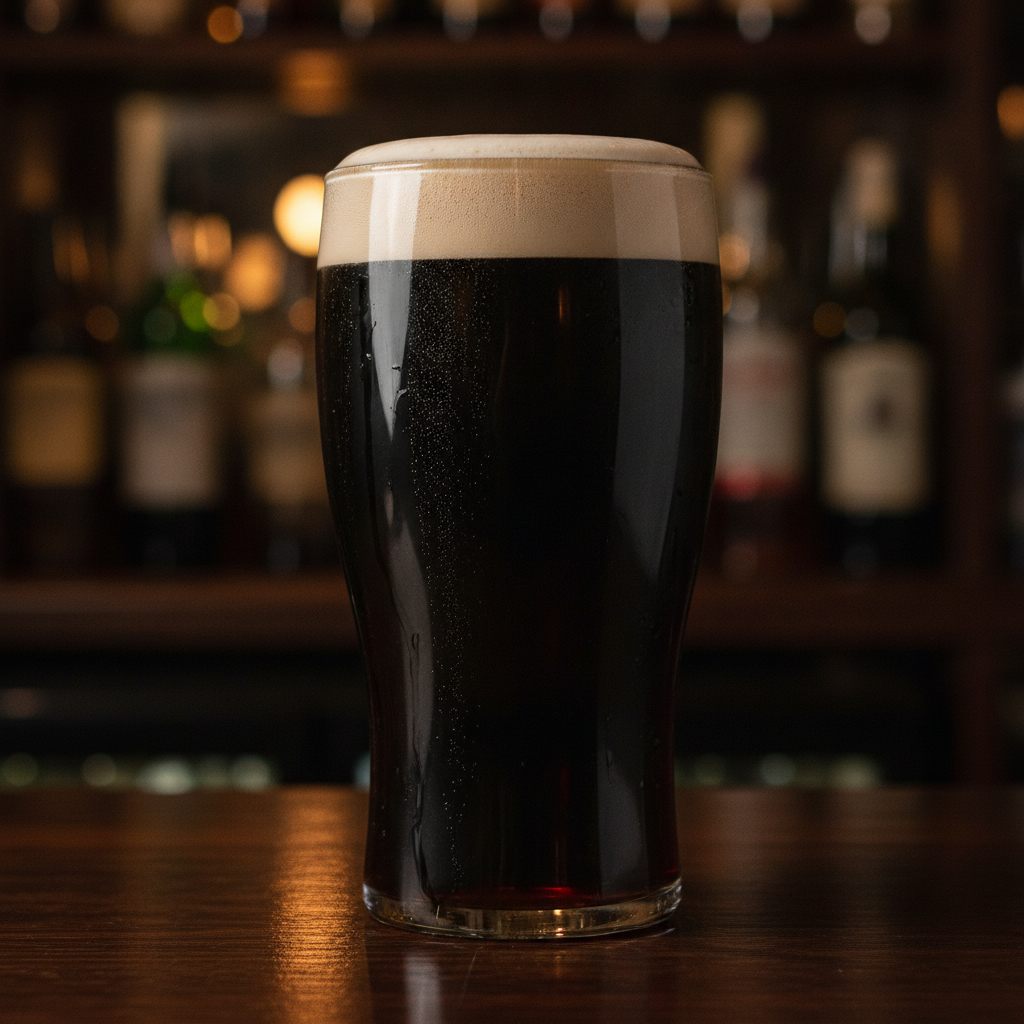
For years, stout was the beer everyone respected but few actually ordered. It sat quietly at the end of the bar, dark and a little serious, while lager and hazy pale ale did the heavy lifting. That has well and truly changed. In 2026, stout is the breakout beer of the moment: the one part of craft to grow while everything around it shrank, and the pint drinkers are suddenly proud to be photographed holding. If you have noticed more dark beer in more glasses lately, you are not imagining it. Stout is having a genuine cultural moment, and it is worth understanding why.
This is not a fleeting fad dreamed up by marketers. The shift shows up in the sales figures, in what younger drinkers are ordering, and in the sheer creativity coming out of small breweries. Here is what is driving stout's surge, and what it means whether you are a lifelong fan or someone who has never got past that first bitter sip.
The one part of craft beer that is actually growing
Let's start with the numbers, because they are striking. While much of the craft beer category has been under pressure, stout was the only craft segment to grow, nearly doubling its volume sales compared with the previous year. That is an extraordinary result in a market where most styles have been flat or falling.
The contrast is what makes it remarkable. Craft ales and craft lagers have both been slipping, squeezed by rising costs and cautious spending, even if cask ale is quietly staging its own comeback. Stout went the other way entirely, and it did so at pace. When almost double the volume moves in twelve months, that is not a rounding error or a good quarter. It is a change in what people want to drink.
Part of the story is simply that stout was underrated for a long time. It was pigeonholed as a winter drink, an older person's pint, or something you only had on a trip to Dublin. That reputation has fallen away, and a style that never really went anywhere has been rediscovered by a whole new audience.
The Guinness effect
You cannot talk about stout in 2026 without talking about Guinness. The brand has enjoyed a cultural moment that few beers ever manage. It has become the pint of choice for a younger crowd, a fixture on social media, and a genuine talking point rather than just a drink.
Some of that is heritage doing its work. The Netflix drama drawing on the Guinness family story put the name in front of millions, and the pour itself, the two-part ritual and the settling surge, turned out to be perfect for short-form video. The much-shared habit of trying to "split the G" on the first sip gave people a reason to order one and share it. Around big sporting weekends, particularly the Six Nations rugby, a creamy stout became the obvious pint in hand. Guinness has even lent its look to the cocktail menu, inspiring the Baby Guinness, a layered shot built to resemble a tiny pint.
The knock-on effect matters more than any single campaign. When one dark beer becomes fashionable, it lifts the whole style. Drinkers who came for Guinness stayed for stout in general, and independent brewers have been quick to offer their own smooth, nitro-poured answers. New challenger brands have appeared precisely because the category is suddenly worth competing in. A rising tide, as they say, and this one is jet black with a creamy head.
Nitro, and why texture is the secret
If flavour got people curious, texture is what keeps them coming back. Nitro stout, poured using nitrogen rather than the sharper carbon dioxide, is the reason so many first-timers are converted. The gas produces tiny bubbles, that famous cascading pour, and a soft, almost velvety mouthfeel with a thick, lasting head.
That smoothness is the key to stout's wider appeal. It softens the roasted, coffee-like character and takes the edge off any bitterness, so the beer feels gentle and moreish rather than heavy or challenging. Many people who assume they dislike dark beer are really reacting to bitterness, and nitro sidesteps that almost completely.
Crucially, this experience is no longer confined to the pub. Widget cans and at-home nitro devices let drinkers recreate that creamy, draught-style pour in their own kitchen, which has helped stout hold on to the new fans it won. The result is a style that tastes like an occasion whether you are in a busy bar or on your own sofa.
Pastry, imperial and barrel-aged: stout goes premium
At the other end of the spectrum, stout has become the playground for brewers who want to show off. This is where the style gets genuinely exciting, and where a lot of the buzz among enthusiasts lives.
A few styles worth knowing if you want to explore beyond the standard pint:
- Dry Irish stout — the classic: light-bodied, roasty, endlessly drinkable, and still the biggest seller by far.
- Milk or sweet stout — brewed with lactose for a rounder, gently sweet, chocolatey character.
- Pastry stout — big, indulgent beers designed to taste of dessert, think vanilla, salted caramel or chocolate brownie.
- Imperial stout — high in strength and depth, rich with dark fruit, coffee and cocoa, meant for slow sipping.
- Barrel-aged stout — imperial stout matured in whisky or bourbon casks, layered and complex, often the priciest bottle on the shelf.
The trend among serious brewers is a subtle shift away from the sweetest pastry stouts towards more restraint, letting the barrel and the malt do the talking rather than piling on the syrup. Coffee and chocolate stouts, meanwhile, are among the fastest-growing of the lot. These beers command real prices and reward slow drinking, which is a big part of how stout has shed its cheap-and-cheerful image.
A new crowd: younger and female drinkers
Perhaps the most telling sign of stout's revival is who is drinking it. This is no longer a pint associated mainly with older men. Younger drinkers have embraced it as fashionable and photogenic, and, notably, far more women are ordering stout than a few years ago.
The reason ties back to everything above. Where stout was once seen as bitter and hard work, the modern nitro pint reads as smooth, creamy and approachable, closer to a treat than a test. It pairs beautifully with food, from oysters to chocolate pudding, and it carries a certain quiet confidence at the bar. For a generation happy to drink less but better, a well-poured stout fits perfectly: characterful, satisfying and worth savouring.
There is a practical angle too. Stout is often lower in alcohol than its dark, rich appearance suggests. A standard dry stout is usually around four per cent, gentler than many lagers, and if you are curious about the nutritional side, we broke down the calories in a pint of Guinness. The takeaway is that a classic stout is rarely the indulgence people assume it to be.
Why 2026 is stout's year
Put it all together and the surge makes complete sense. Stout is the only craft style genuinely growing, it has a cultural moment behind it, its smooth nitro texture wins over sceptics, its premium versions excite enthusiasts, and it has broadened its audience to younger and female drinkers who once overlooked it.
The best news is that stout is an easy style to fall for. If you have written it off, order a fresh nitro pint and give it a proper chance, or seek out a small local brewery's imperial or barrel-aged version for something with more depth. Taste a few side by side and you will quickly see why dark beer has stepped into the light. In 2026, the quietest pint at the bar has become the most talked about, and it has earned every bit of the attention.