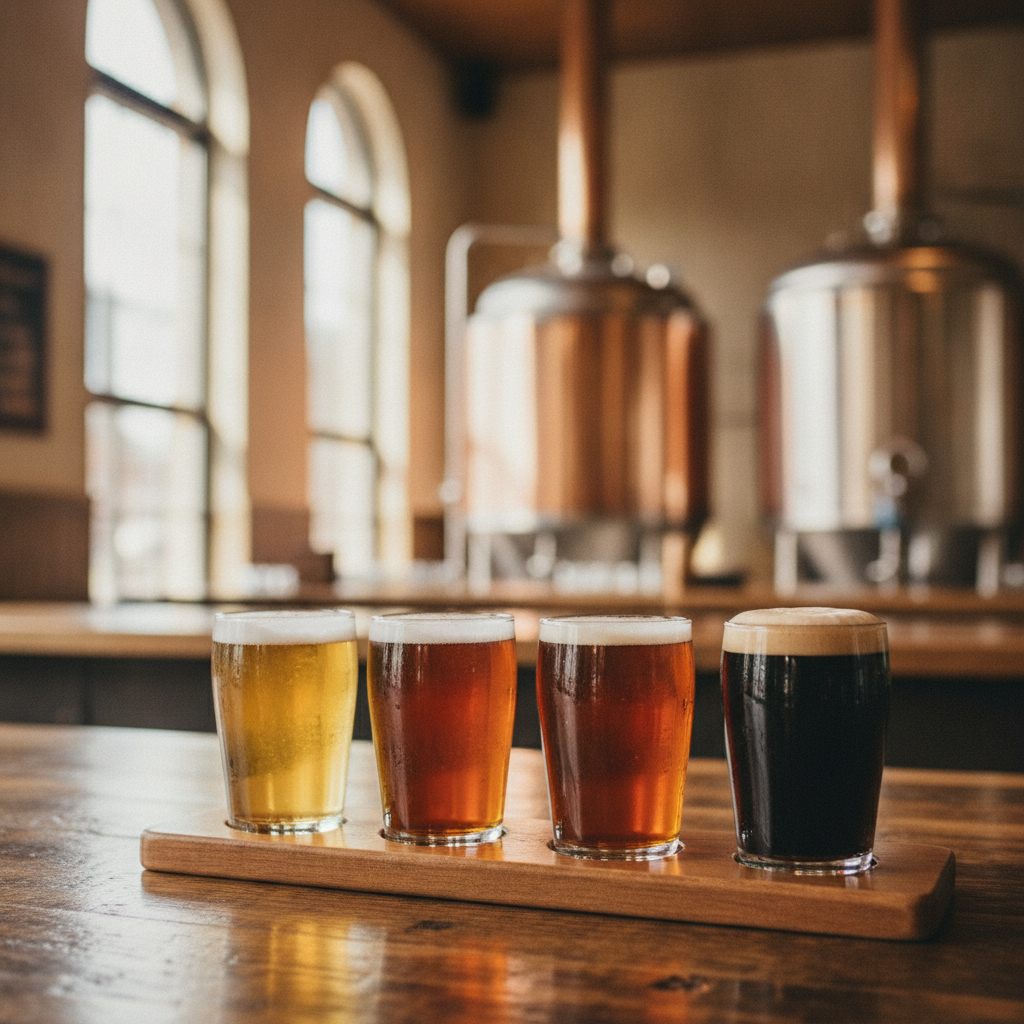
There is a particular kind of pleasure in standing on a brewery floor, pint in hand, while someone who actually made the beer explains why the water in this part of the country tastes the way it does. It is a world away from grabbing four cans off a supermarket shelf. And in 2026, more of us are chasing exactly that feeling. Brewery tours and beer experiences are booming, not because people are drinking more, but because they want what they drink to mean something. The story behind the glass, the place it came from, the people in the room: that is what is pulling crowds through taproom doors this year.
If you have noticed your own weekends filling up with tap takeovers, tasting flights and festival wristbands, you are not imagining it. Something genuine is shifting in how Britain drinks.
From Drinking More to Drinking Better
The headline trend across UK hospitality in 2026 is simple to state and profound in its effects: people are drinking less often, but making each occasion count for more. Frequency is down; deliberation is up. When a night out or an afternoon activity has to earn its place, a memorable experience beats another anonymous round every time.
Beer has been a quiet beneficiary of this. Rather than seeing moderation as a threat, the smartest breweries have leaned into it, treating a visit as an event rather than a transaction. A tasting flight of six thirds teaches you more, and lingers longer in the memory, than three pints of the same lager. You come away having learned something, not just having spent something.
This is what people mean by "experiential consumption", and it is reshaping the entire category. The value has moved from volume to depth. A brewery tour sits right at the heart of that shift, because it turns a drink into a story, a skill and a sense of occasion all at once.
Why Manchester, Edinburgh and Bristol Are Leading the Charge
The clearest evidence is on the ground at Britain's beer festivals, from local tap takeovers to national celebrations like Indie Beer Week. Cities like Manchester, Edinburgh and Bristol have seen significant growth in attendance at their beer festivals and events, driven by that same cultural pull toward shared, hands-on experiences and a sense of community.
It is no accident that these three cities are out in front. Each has a dense, fiercely independent brewing scene and a population that treats supporting local makers as a point of pride.
- Manchester has turned festival season into a fixture of the city's calendar, from big warehouse-scale craft events to long-running neighbourhood institutions that pull in thousands of drinkers a year.
- Bristol pairs its harbourside setting with one of the country's most adventurous independent scenes, drawing crowds who come as much for the atmosphere as the beer list.
- Edinburgh blends its festival culture with a growing roster of city-centre and outlying breweries, giving visitors a reason to explore beyond the obvious tourist trail.
What unites them is that the beer is inseparable from the place. You are not just tasting a pale ale; you are tasting Manchester, or Bristol, or Edinburgh, in a room full of people who feel the same way about it.
Beer With a Sense of Place
Ask a room of drinkers why they booked a brewery visit and you will rarely hear "to get a drink". You hear about provenance, craft and curiosity. People want to know who made this, where, and how.
This appetite for beer connected to place is one of the strongest currents running through 2026. In an age when almost anything can be ordered to your door in a day, the things that cannot be shipped, the smell of the mash tun, the hiss of the canning line, a brewer's unguarded opinion on hops, become genuinely valuable. Going behind the scenes at a brewery gives you all of it.
There is a storytelling element too. Every independent brewery is, in a sense, a small act of local defiance: someone decided their town deserved its own beer. Touring these places connects you to that story in a way no label copy ever could. You leave not only knowing how the beer is made, but why it exists at all, and you will happily tell that story to friends over the next round.
Community Is the Real Draw
Strip everything back and the boom comes down to one word: community. The pandemic years taught a lot of us how much we missed being in a room with other people, and beer culture has become one of the most natural ways to get that back. A brewery tour or a festival is a shared experience by design, built for conversation rather than scrolling.
The social pull shows up again and again in what draws people out:
- Doing, not just drinking — a tour gives you something to look at, smell, taste and talk about, which takes the pressure off the pint itself.
- Meeting the makers — chatting to the actual brewer turns a passive drink into a genuine encounter.
- Learning a skill — understanding styles, ingredients and process makes every future pint more interesting.
- A ready-made day out — tours work brilliantly for birthdays, stag and hen dos, work socials, or simply seeing friends properly.
- Belonging somewhere — regulars, festival crowds and taproom communities give people a scene to be part of.
That last point matters more than it might seem. People are not just buying beer; they are buying their way into a community that feels welcoming, knowledgeable and low on pretension. Good breweries understand this, which is why the best tours feel less like a lecture and more like being let in on a secret.
The Low-and-No Effect: Moderation Is Fuelling Beer Culture, Not Killing It
You might assume that the rise of alcohol-free and low-alcohol drinking would work against all this. In practice, the opposite is happening. Moderation and experiential beer culture are growing together, hand in hand.
Alcohol-free beer is now one of the fastest-growing corners of the drinks world, firmly mainstream rather than niche, and the quality has caught up with the ambition. That changes the maths of a brewery visit entirely. When there are excellent low- and no-alcohol options on the bar, more people feel able to come along: designated drivers, the sober-curious, anyone pacing themselves. Nobody has to sit out.
It also shifts the focus onto flavour and craft, which is exactly where an experience-led day thrives. If you are drinking less, you want what you do drink to be interesting, and a tasting-led tour delivers precisely that. Moderation has not shrunk beer's cultural footprint; it has widened the door.
What to Expect on a Modern Brewery Tour
If the last brewery tour you did was a quick walk past some tanks and a token half at the end, the modern version will surprise you. Today's experiences are built around tasting, storytelling and genuine access.
A good tour in 2026 typically includes a guided walk through the brewing process from grain to glass, a structured tasting across several styles so you can train your palate, time with brewers or expert hosts who clearly love the subject, and the context that ties it all to the local scene. Many now weave in food pairings, festival-style events and behind-the-scenes access that a casual bar visit could never offer.
The beauty of it is how well it suits almost any group. Whether you are a committed beer geek or someone who simply fancies a memorable afternoon, there is a format to match. Exploring several breweries in a city on one of our brewery tours is one of the easiest ways to understand why the scene has caught fire, because you feel the community, the craft and the sense of place all in a single day.
The Takeaway
The brewery-tour boom of 2026 is not a fad, and it is not really about beer volumes at all. It is about a lasting change in what we want from a drink: connection over quantity, stories over stuff, and time spent with other people over another quiet night in. Beer, with its deep ties to place and community, happens to be a perfect vehicle for all of that.
So if you have been meaning to book that tour, take the trend as your nudge and find a brewery tour near you. The tanks are gleaming, the taprooms are buzzing, and there has rarely been a better time to go and see for yourself where your favourite pint really comes from.