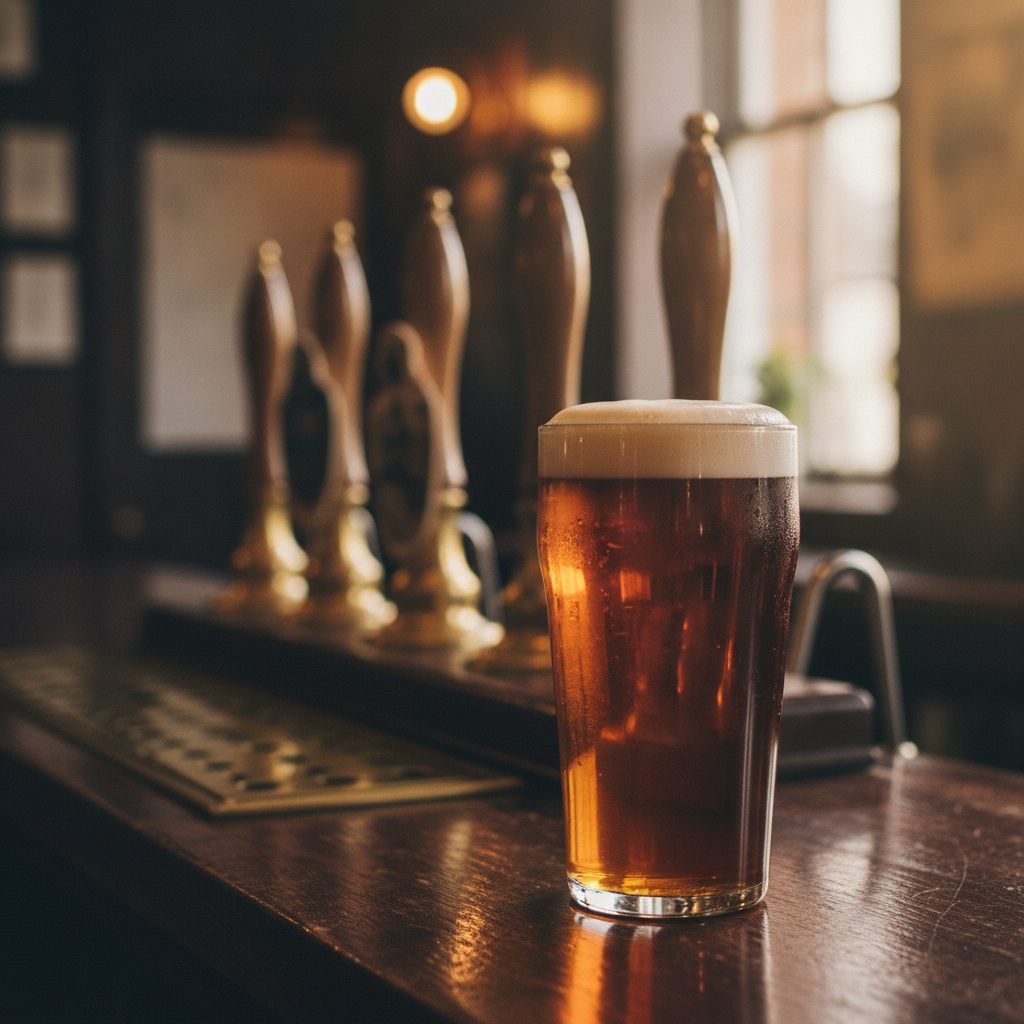
If you only read the headlines, you would be forgiven for thinking UK craft beer is on its last legs. In January 2026, the Society of Independent Brewers and Associates (SIBA) warned of a "survival crisis", and the raw numbers make for sobering reading. Yet spend an afternoon in a good taproom, pint of hazy pale ale in hand, and the mood is anything but funereal. The truth about the state of UK craft beer in 2026 is more interesting, and frankly more hopeful, than either the doom-laden headlines or the relentless optimism of the marketing suggests. This is a state-of-the-nation for beer lovers: honest about the losses, but clear-eyed about the reasons to keep the faith.
The numbers behind the 'survival crisis'
Let us start with the hard facts, because they matter. On 1 January 2026, the UK was home to roughly 1,578 breweries, down from 1,715 a year earlier. That is 137 fewer breweries in twelve months, or a net closure rate of almost three every single week. It represents a 37% spike in closures compared with the year before, one of the sharpest annual declines that SIBA's Brewery Tracker has ever recorded.
That is the context for the "survival crisis" language. When a trade body chooses a phrase that stark, it is not being melodramatic; it is trying to get the attention of politicians and drinkers alike. In SIBA's own survey, nearly a third of independent brewers expected turnover to fall in 2026, and for close to half of them, simple survival had become the top priority for the year ahead.
It is worth being precise about what these figures do and do not mean. A brewery closing is not the same as a brewery going bust in disgrace. Some are casualties of genuine financial distress; others are founders reaching retirement with no obvious successor, or small operations quietly absorbed into larger groups. The headline number is real, but it is a blunt instrument. Behind it sits a whole spectrum of stories.
Why so many breweries are closing
No single villain explains the squeeze. Talk to brewers up and down the country and the same handful of pressures come up again and again. According to SIBA's members, the five biggest challenges facing the independent brewing sector are:
- Alcohol taxation — the duty burden weighs disproportionately on small producers, even with small-brewer relief.
- The dominance of global brewers — a handful of multinationals hold enormous sway over what gets stocked and promoted.
- Energy prices and market access — brewing is energy-hungry, and getting your beer into pubs is harder than ever.
- Ingredient costs — malt, hops, packaging and glass have all climbed.
- Staffing and employment — recruiting and retaining skilled people has become a real headache.
Layered on top is the tied-pub problem. A large share of British pubs are owned or tied to big brewers and pub companies, which means the taps are effectively spoken for before a small local brewer even picks up the phone. You can make the best bitter in the county and still struggle to get a single line in your nearest boozer. When your route to market is that constricted, thin margins turn into losses quickly.
Add the broader backdrop — cautious consumer spending, a long-running dip in on-trade footfall, and the simple fact that a lot of breweries opened during the 2010s boom and were always going to face a reckoning — and the closures start to look less like a collapse and more like a long-overdue correction after a decade of extraordinary growth.
The other side of the story: cask, production and local loyalty
Here is where the honest picture gets genuinely encouraging, and where the headlines tend to stop short. Despite all of the above, independent brewers' production has returned to pre-pandemic levels. That is a remarkable recovery given everything the sector has weathered since 2020.
Even better, independently brewed cask beer — that most British of formats, the living, breathing beer served straight from the cask — is in double-digit growth. After years of obituaries written for real ale, cask is quietly having a moment again. Drinkers are rediscovering that a well-kept pint of cask, at cellar temperature and bursting with character, is one of the best-value luxuries in the country.
Why the resurgence? A few threads seem to be pulling in the same direction:
- Local roots are a genuine advantage. SIBA's own research points to independents winning custom precisely because they are local, distinctive and part of the community in a way global brands cannot fake.
- Value and provenance matter more in a tight economy. When money is careful, people want their pint to mean something — and beer brewed a few miles away, by people they can name, delivers that.
- Cask is uniquely British and uniquely fresh. It is a format the multinationals largely ceded, which leaves the field open to the small and the passionate.
In other words, the very qualities that make small breweries commercially vulnerable — being small, local and hands-on — are also exactly what a growing number of drinkers say they want. That is not a contradiction to wave away. It is the single most important reason for optimism about the state of UK craft beer in 2026.
Consolidation: the quiet reshaping of the market
The other big shift is consolidation. Rising mergers and acquisitions mean that some of those 137 "lost" breweries have not vanished so much as been folded into larger groups. The UK beer market is worth around £1.6 billion, and where there is value, there is dealmaking.
Consolidation is a double-edged pull. On one hand, a well-capitalised parent can rescue a beloved brand, invest in kit, and open doors to distribution that a lone brewery could never prise apart. Plenty of favourite beers survive today only because someone bigger bought in. On the other hand, every merger nudges the market towards fewer, larger players, and risks sanding down the very diversity that made British craft beer exciting in the first place.
For drinkers, the practical upshot is worth keeping an eye on. It pays to know who actually owns the brand on your pump clip, and to seek out the genuinely independent breweries — the ones still owned by the people who founded them — if that independence is something you value in your glass.
What it all means for beer lovers, and reasons for optimism
So where does this leave you, pint in hand, in 2026? In a better place than the gloom suggests, provided you are willing to be a slightly more deliberate drinker.
The sector is leaner, and yes, some cherished names have gone. But the breweries coming through this period are, almost by definition, the resilient, well-run and genuinely loved ones. The froth of the boom years is settling, and what remains is often the good stuff. Cask is growing, production is back to full health, and the appetite for local, characterful beer is strong. Newer styles are thriving too, with the rise of alcohol-free beer giving brewers one of their fastest-growing categories almost from nothing.
The best thing any of us can do is simple and enjoyable: drink local, drink cask, and go and meet the people who make it. Visiting a working brewery is the fastest way to understand why all this matters — you taste the beer at its freshest, you see the graft behind it, and you put money directly into the hands of independent producers. If you fancy doing exactly that, one of our brewery tours is a genuinely useful way to support the breweries riding out this crisis while having a very good day of it.
A few easy ways to back British beer this year:
- Ask your local landlord to stock beers from a nearby independent.
- Buy directly from breweries and their taprooms when you can.
- Try a cask ale you have never had, rather than defaulting to the familiar.
- Check who owns a brand if true independence matters to you.
A closing pint
The state of UK craft beer in 2026 is not a simple story of decline, nor a fairy tale of endless growth. It is a hard year for a resilient industry — real losses, real pressures, but also real recovery and real loyalty. The breweries that make it through will be stronger for it, and the beer in your glass is, on the whole, as good as it has ever been. The best way to guarantee there is a thriving, independent brewing scene to enjoy in 2027 and beyond is to raise a glass to it now, ideally somewhere local, and ideally cask. Cheers to that.