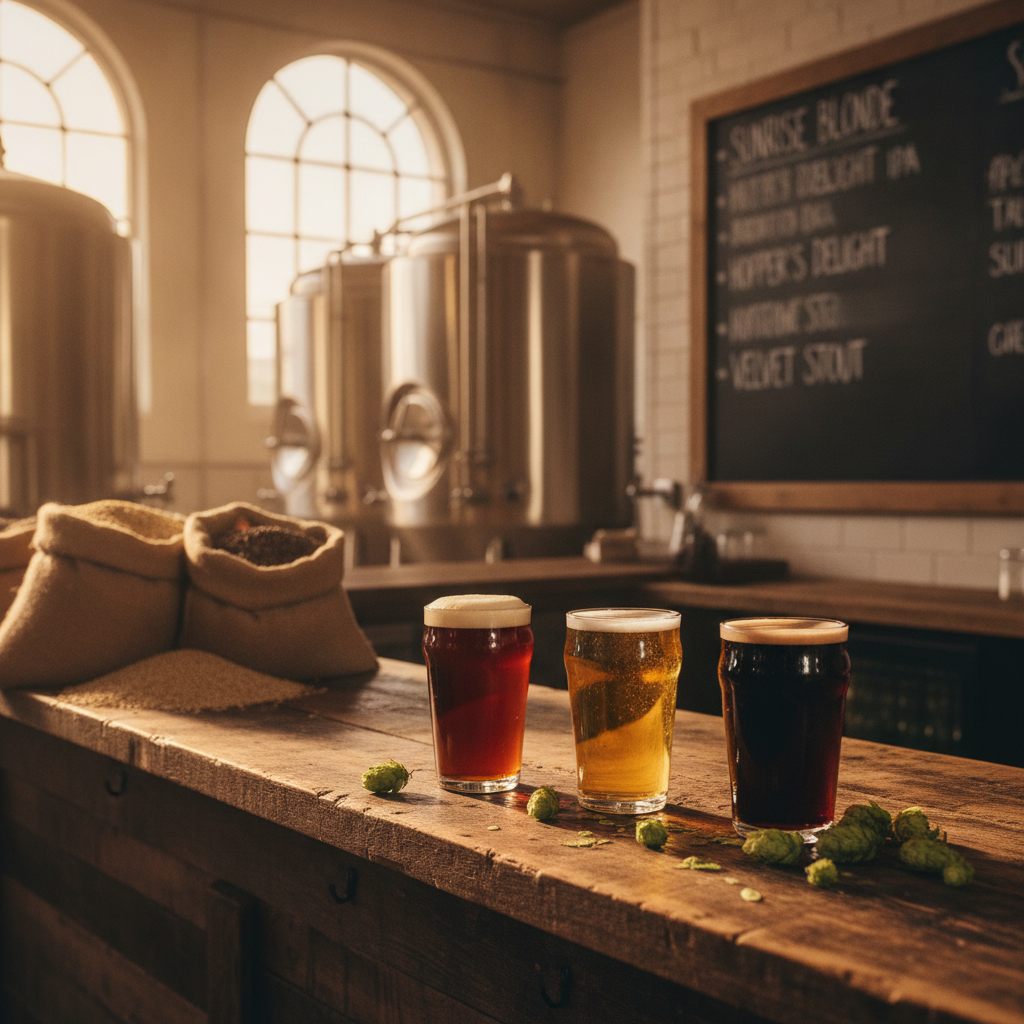
There is a quiet shift happening at the bar, and it has little to do with the latest hazy pale or barrel-aged stout. It is about where your money goes when you order a pint. More and more of us want to know who actually made our beer, whether it was brewed down the road or in a distant facility owned by a multinational, and whether the people behind it are doing right by their staff, their suppliers and their community. Supporting independent UK breweries has never felt more urgent, and with roughly three breweries closing every week, the choices we make at the pump now carry real weight.
Drinking local used to be a pleasant, slightly romantic idea. Today it is closer to a lifeline for the small producers who give British beer its character. The good news is that keeping them going does not require grand gestures. It starts with knowing what to look for, understanding why it matters, and being a little more curious about the glass in front of you.
Why "Drink Local" Has Become More Than a Slogan
For years, "buy local" was something we nodded along to without thinking too hard about it. That is changing. Drinkers increasingly care where their money ends up, and they want beer that feels connected to a place and a community rather than churned out anonymously. There is a growing appetite for producers who behave responsibly, whether that means paying fair wages, sourcing ingredients thoughtfully, or simply being honest about who owns them.
Part of this is a reaction against sameness. When every high street offers the same handful of global brands, a beer made by fifteen people in a railway arch or a converted barn starts to feel like something worth seeking out. It has a story, a postcode and a human face. A local brewery is also part of the local economy in a way a multinational never can be: it employs local people, buys from local suppliers, sponsors the pub quiz and turns up at the summer fete.
There is a flavour argument too. Independent breweries tend to brew in smaller batches, take more risks, and turn beer around quickly, so what you drink is fresher and more distinctive. You are far more likely to find a genuinely interesting saison, a proper cask mild, a bold stout from one of the independent stout brewers leading its revival, or an experimental single-hop pale from a small brewer than from a corporate portfolio built around a few reliable sellers.
The Maths Behind the Closures
The pressure on small brewers is real, and the numbers are sobering. Breweries have been closing at an average of around three a week, and the total number of UK breweries has fallen noticeably over the past few years. Crucially, this is not a story about people going off beer. Demand for local, independent beer remains strong. The problem is structural.
Several forces are squeezing small producers at once:
- Rising costs and tax burdens that hit small breweries disproportionately hard, from energy and ingredients to the duty system.
- Consolidation and merger activity, as larger companies buy up once-independent names and the market concentrates into fewer hands.
- Restricted access to pubs, where tied arrangements and big-brand contracts make it difficult for a small brewer to get their beer in front of drinkers.
- Thin margins, which leave little room to absorb a bad month, a broken fermenter or a sudden jump in the price of malt.
When a genuinely independent brewery closes, we do not just lose a business. We lose recipes, local jobs, a gathering place and a little more of the diversity that makes British beer worth talking about. Every one that survives does so partly because enough people chose its beer over a cheaper, more heavily marketed alternative.
What You Actually Get When You Buy Independent
It is easy to frame drinking local as a slightly worthy act of charity. It is not. Choosing independent beer is, more often than not, the better drink as well as the better decision. Here is what you are really paying for:
- Fresher beer, brewed in small batches and sold close to home, so it reaches you closer to its best.
- Money that stays in the community, circulating through local suppliers, landlords and staff rather than leaving the region entirely.
- Genuine variety, from styles that big producers consider too niche to seasonal one-offs you will never see again.
- A shorter, more transparent supply chain, which often means a smaller environmental footprint and clearer provenance.
- Real accountability, because a small brewer's reputation lives and dies locally, so they have every reason to do things properly.
- A connection to a place, so that a beer becomes a memory of a city, a valley or a particular pub rather than just a brand.
None of this asks you to compromise on quality. If anything, it is an invitation to drink better.
The Catch: Not Everything That Looks Independent Actually Is
Here is where it gets complicated. A lot of beer that looks and feels independent is not. Some of the best-known "craft" names in Britain are now owned by global drinks giants, even though their branding, cans and pump clips still trade on a scrappy, small-batch image. Surveys have found that many drinkers genuinely believe these brands are independent when they are not, and that some globally owned beers are more likely to be assumed independent than the truly independent breweries competing alongside them.
This is not about shaming anyone for their taste. Plenty of these beers are perfectly good. But if part of your reason for buying a pint is to support small, local, independent producers, it matters enormously whether your money is actually reaching one. Ownership is often deliberately hard to see, and the marketing rarely volunteers the truth.
How to Spot a Genuinely Independent Brewery
The encouraging news is that it has never been easier to check. In response to exactly this confusion, the Society of Independent Brewers and Associates (SIBA) launched its "Indie Beer" campaign, complete with a seal that appears on the pump clips, cans and bottles of genuinely independent UK brewers. Spot the mark and you can drink with confidence. It also runs Indie Beer Week each year, a nationwide celebration of the small breweries the seal is designed to protect.
A few simple habits go a long way:
- Look for the Indie Beer seal on the pump clip, can or label. Hundreds of independent breweries have signed up to display it.
- Use the beer checker at indiebeer.uk if you are unsure who owns a particular brand. A quick search tells you whether a brewery is truly independent.
- Ask at the bar. Good pubs are usually proud of their local and independent lines and happy to point you to them.
- Buy direct from the brewery's own taproom, shop or website whenever you can — many run their own tours you can book directly — so more of your money reaches the people who made the beer.
- Visit the source. Nothing beats seeing where and how your beer is made, meeting the brewers and tasting straight from the tank. Spending a day exploring small producers on one of our brewery tours is one of the most enjoyable ways to discover independent breweries you will happily champion for years. Search for a brewery tour near you and you will often find an independent brewer within easy reach.
Once you start noticing the seal and asking the question, it becomes second nature, and you will be surprised how quickly your regular order shifts towards genuinely local beer.
A Pint Is a Vote
It is tempting to think that one person's drinking choices cannot influence something as large as an industry. But breweries stay open because enough people, one round at a time, choose their beer. In a market where three close every week, that collective choice is powerful.
Drinking local is not about giving up the beers you love or turning every pint into a political statement. It is simply about being a little more curious and a little more deliberate: reading the pump clip, looking for the seal, asking who really made your beer, and, when you can, going to see the places where it happens. Do that, and you are not just enjoying a better drink. You are helping to keep independent brewing, and the communities built around it, alive for the next round.