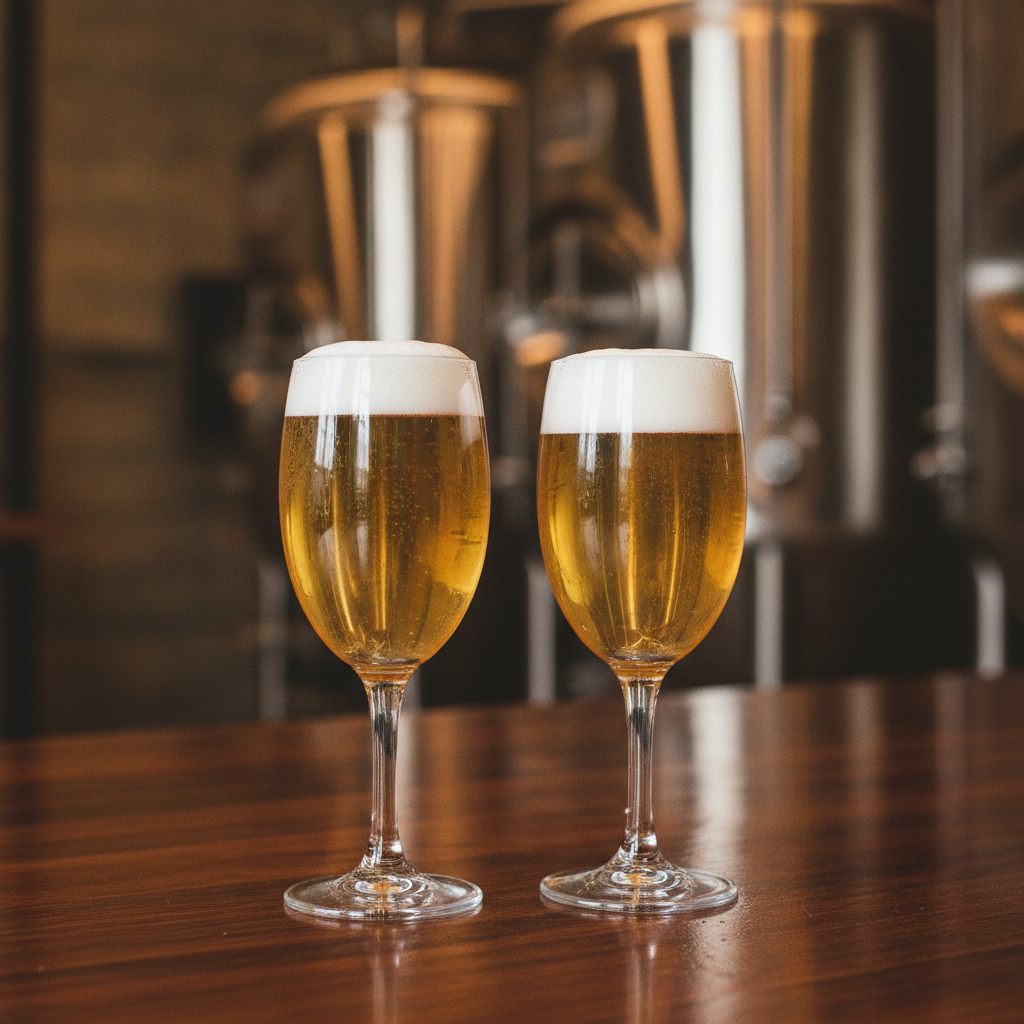
For years, lager was the beer we ordered when we couldn't be bothered to think. It sat at the unglamorous end of the bar while everyone with an opinion reached for a hazy IPA, a pastry stout or whatever sour had been aged in a barrel that week. Then something shifted. In 2026, craft lager quietly became the coolest thing on the board again, and the Great British lager is suddenly one of the most talked-about styles in the country. If you've noticed more helles, pilsner and Italian-style pils appearing on tap lists near you, you're not imagining it.
This isn't a fad born of nostalgia. It's a genuine change in what British drinkers want and what British breweries are proud to make. After a decade of ever-bigger, ever-sweeter, ever-hoppier beers, a lot of us simply want a pint that tastes clean, crisp and moreish. Craft lager delivers exactly that, and it turns out to be one of the hardest things a brewery can do well.
Why Lager Became the Coolest Thing on the Board Again
The craft beer scene has always run on novelty. For much of the 2010s that meant a relentless arms race of double dry-hopped this and triple-fruited that. It was thrilling for a while, but palate fatigue is real. When every beer is turned up to eleven, nothing stands out, and a lot of drinkers found themselves quietly longing for something they could enjoy by the pint rather than admire by the third of a glass. Even the IPA, long the flag-bearer of that arms race, is now shifting towards lower ABV and more bitterness.
Craft lager answered that longing. It's the beer you can drink two or three of across an evening without your palate waving a white flag. That same appetite for something you can genuinely enjoy by the pint has also fuelled alcohol-free craft lager, now one of the fastest-growing corners of the bar. Drinkability, once treated as a slightly boring virtue, has become genuinely aspirational again.
There's also a technical prestige at work. There is nowhere to hide in a well-made lager. If your fermentation, your hygiene and your process aren't dialled in, a pale lager will expose every flaw mercilessly. A stout can bury a rough edge under roast and sweetness; a hazy IPA can drown it in hops. A flawless helles cannot. Producing one has become a kind of badge of honour among British brewers, which is precisely why so many of the country's best are now determined to prove they can do it.
What "Craft Lager" Actually Means
It's worth clearing up a common muddle, because "lager" has been doing a lot of heavy lifting for decades as shorthand for cold, fizzy and forgettable. Lager isn't a flavour so much as a method. It refers to beers made with lager yeast, fermented cool and then conditioned cold for an extended period, a process brewers call lagering. If the labels still trip you up, our explainer on the difference between beer and lager untangles it.
Craft lager, then, is that same family of beer made with care rather than at industrial pace and scale. Where a mass-market lager might be rushed through conditioning to keep the tanks turning, a craft brewery will give it the slow, cold rest it needs to develop a soft, rounded character. The result is a beer with real depth: bready malt, a whisper of noble hop, a clean bitterness and a finish that invites the next sip.
Pilsner, for the record, is a type of lager rather than a separate thing. It's a pale, hop-forward lager that first emerged in the Czech city of Pilsen, and it's one branch of a much broader family that British brewers are now exploring with real enthusiasm.
The Styles Leading the Great British Lager Revival
Part of what makes this moment so enjoyable is the sheer range on offer. This isn't one beer wearing different labels; it's a whole spectrum of classic Continental styles being reinterpreted by UK breweries. Here are the ones you're most likely to encounter:
- Munich Helles. Soft, gently bready and malt-led, with just enough hop to keep it honest. The archetypal "one more, please" lager and a brilliant benchmark for a brewery's skill.
- German pilsner. Crisper and drier than helles, with a firmer, more assertive noble-hop bitterness and a snappy finish.
- Czech-style pale lager. Rounder and richer than its German cousin, often with a fuller body and a lovely balance of bready malt and spicy Saaz hops.
- Italian-style pils. The style of the moment. A German pilsner given a generous dry-hopping with European hops, so it keeps that clean lager backbone but gains a fragrant, floral, almost perfumed aroma. It traces back to Birrificio Italiano's Tipopils, first brewed in 1996 and widely credited as the original dry-hopped pilsner.
- Dark lagers. Czech tmavé and German-style dunkel bring gentle notes of cocoa, toast and toffee without any of the heaviness you might expect from the colour.
The common thread is restraint. Every one of these beers is built on balance and precision rather than the loudest possible flavour, and that's exactly what makes them so satisfying to drink and so revealing to taste side by side.
The Patience Game: Why Cold Conditioning Matters
If there's one thing that separates a great craft lager from a merely decent one, it's time. Lagering, the long cold-conditioning that gives the style its name, is where the magic happens. Held for weeks at close to freezing, the beer sheds its rough young edges, drops bright and clear, and mellows into something remarkably smooth.
This is a genuine commitment for a brewery. A tank tied up for six or eight weeks conditioning a lager is a tank not producing three quick batches of something hoppier and more lucrative. Choosing to lager properly is choosing craft over churn, and it's why a well-made British lager can feel like such a labour of love.
Italian-style pils shows how thoughtful brewers work with the method rather than against it. The classic Tipopils approach dry-hops while the yeast is still active and at surprisingly modest hopping rates, coaxing out a soft, saturated aroma you simply can't get by dumping in hops at the end. It's a lovely example of technique doing the heavy lifting instead of sheer quantity.
Drinkability Over Hype: A Cultural Shift
The rise of the Great British lager says something about where beer culture is heading. For a long time, craft was measured in extremes: the highest ABV, the rarest ingredient, the longest queue for a can release. Lager is a quiet rebuke to all of that. It can't be hyped into being good; it either is or it isn't, and you know within one sip.
That honesty is refreshing in every sense. It rewards breweries that have done the unglamorous work of getting their fundamentals right, and it rewards drinkers who care more about how a beer actually drinks than how it looks on a shelf. A perfectly poured helles won't trend on social media the way a rainbow-coloured sour might, but it's the beer people come back for. In a market that spent years chasing the next big thing, choosing to make something clean, classic and endlessly drinkable feels almost radical.
Tasting Craft Lager at Its Best
The best way to understand why so many people are falling for craft lager is to taste a few good ones properly, ideally fresh and side by side. Lager is at its most glorious young and well-kept, which is exactly how you'll find it at the source. On one of our brewery tours you can taste a freshly lagered helles or pils straight from the brewery that made it, and hear from the people who sweated the details of fermentation and conditioning to get it right.
When you do sit down with a flight, a few things are worth paying attention to:
- Clarity and colour. A bright, brilliant lager is a sign of patient conditioning.
- Aroma. Look for clean bready malt and delicate, floral or herbal noble hops, especially pronounced in an Italian-style pils.
- The finish. The mark of a great lager is that dry, clean, moreish finish that makes you reach straight back for the glass.
Taste them together and the differences between a helles, a pilsner and a dry-hopped Italian pils suddenly become vivid rather than academic.
The Last Word
Craft lager's moment is well earned. It's the style that asks the most of a brewery and gives the most back to the drinker, and its rise reflects a welcome maturing of British beer, away from novelty for its own sake and towards genuine quality and drinkability. The Great British lager isn't a step backwards to the fizzy pints of old; it's a confident step forward, proof that clean, crisp and beautifully made can be every bit as exciting as loud. Pour one cold, take an unhurried sip, and you'll understand exactly why it's having a moment.